

Ford F-150 4x4 vs 4WD vs AWD: Key Differences
Welcome to Serra Ford in Rochester Hills. We help Michigan drivers choose the right truck drivetrain. When shopping the 2026 Ford F-150, you'll encounter terms like 4x4, 4WD, and AWD — and knowing the difference matters. Michigan's weather changes fast, from snow-packed roads to muddy job sites, and the right drivetrain affects performance, fuel economy, and how confident you feel behind the wheel.
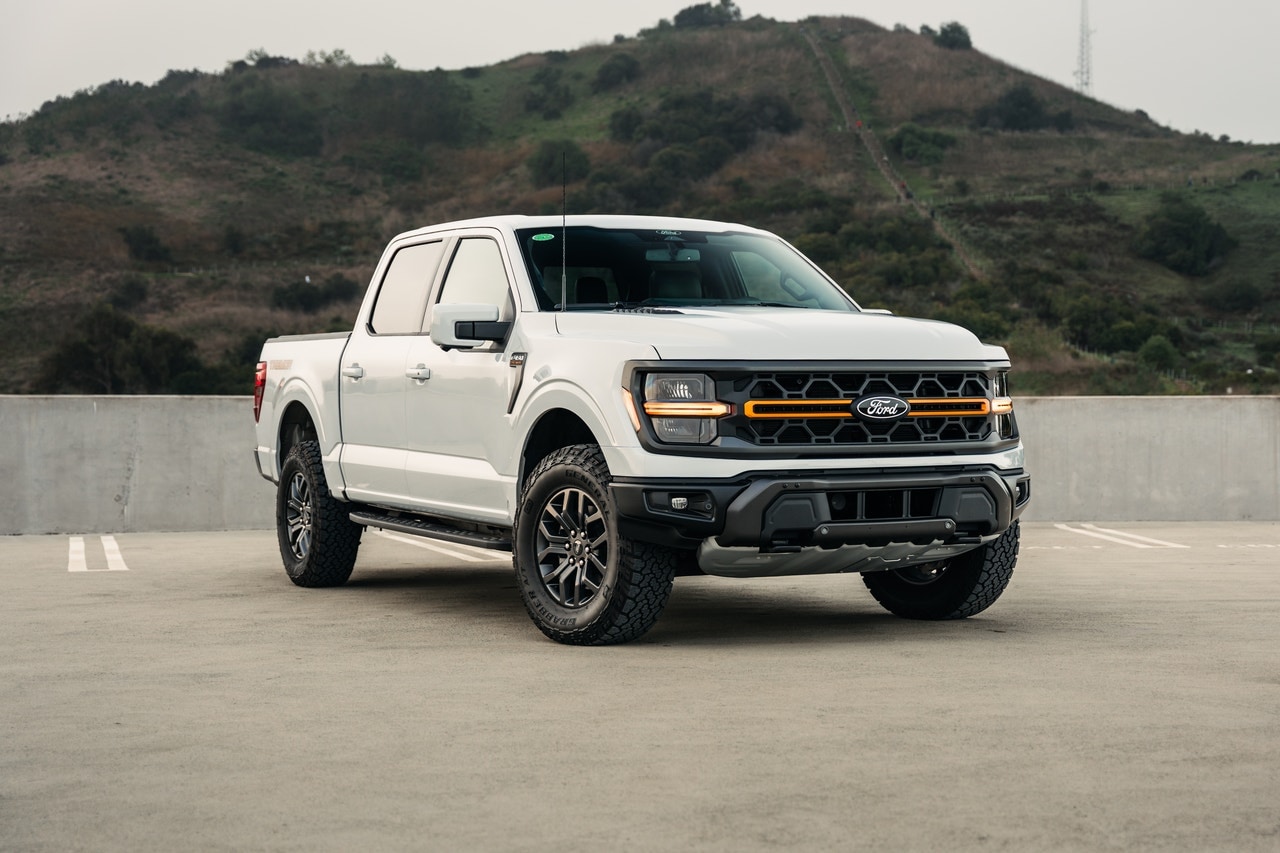
Many drivers assume 4x4, 4WD, and AWD mean the same thing — they don't. All-wheel drive handles slippery roads and emergency traction automatically. Four-wheel drive is engineered for off-road adventures, serious weather, and heavy hauling. And 4x4? It's simply another name for 4WD.
This guide breaks down every system, how they work, when to use them, what they cost, and which one fits your lifestyle in Rochester Hills and beyond.
Understanding Drivetrain Terminology for Your 2026 Ford F-150
The first thing to know: 4x4 and 4WD are the same thing. Both terms refer to systems that send power to all four wheels for added traction. The industry uses these terms interchangeably — Ford may use one on a badge and another in the spec sheet, but the technology is identical.
AWD (All-Wheel Drive) works differently. It automatically distributes power to each wheel based on real-time road conditions — no driver input needed. Here's how all four drivetrain types compare at a glance:
| Drivetrain Term | Power Delivery | Driver Control | Best Use Case |
|---|---|---|---|
| 4x4 / 4WD | Powers all four wheels when engaged | Manual engagement via switch or dial | Off-road trails, deep snow, challenging terrain |
| AWD | Automatically distributes power to all wheels | Fully automatic, no driver input needed | Daily driving, light snow, wet roads |
| 2WD | Powers rear wheels only | Always active in 2WD mode | Dry pavement, highway driving, fuel economy |
| Part-Time 4WD | Switches between 2WD and 4WD modes | Manual switching required | Occasional off-road use, severe weather |
What Does 4x4 Mean on the Ford F-150?
The 4x4 badge means your F-150 can send power to all four wheels when you need it. The heart of the system is the transfer case — a secondary gearset sitting between the transmission and the axles that splits engine torque between the front and rear wheels.
Part-Time 4x4
Part-time systems run in standard two-wheel drive during normal driving. You manually switch to four-wheel drive when extra traction is needed — ideal for fuel efficiency, since the front drivetrain components stay disconnected during highway and city driving. The important rule: never engage part-time 4WD on dry pavement. The locked driveshafts can't allow different wheel speeds on firm surfaces, which causes binding and drivetrain wear.
Full-Time 4x4
Full-time systems power all four wheels continuously but include a center differential that allows the front and rear axles to rotate at different speeds. This makes it safe to use on any road surface, including dry pavement. The trade-off is slightly reduced fuel economy compared to part-time systems running in 2WD mode.
| Feature | Part-Time 4x4 | Full-Time 4x4 |
|---|---|---|
| Power Distribution | Switchable between 2WD and 4WD | Continuous power to all wheels |
| Dry Pavement Use | Not recommended in 4WD mode | Safe for all road surfaces |
| Fuel Efficiency | Better in 2WD mode | Slightly lower due to constant engagement |
| Driver Control | Manual engagement required | Automatic power management |
| Best For | Occasional off-road and winter use | Frequent mixed-condition driving |
How Drivers Control 4WD Engagement
Ford makes controlling your 4WD simple with an electronic rotary dial or push-button system on the dashboard. Most 2026 F-150 models offer four primary drive settings:
| Setting | Description | Best Use |
|---|---|---|
| 2H (Two-Wheel High) | Power to rear wheels only | Normal highway and city driving on dry pavement |
| 4H (Four-Wheel High) | Power to all four wheels at normal speeds | Wet roads, light snow, gravel, or mud |
| 4A (Auto Four-Wheel) | Automatically engages front wheels when slip is detected | Variable conditions where traction changes frequently |
| 4L (Four-Wheel Low) | Maximum torque multiplication at slow speeds | Rock crawling, steep grades, deep snow, or heavy towing in difficult terrain |
You can shift between 2H, 4H, and 4A while driving up to 55 mph. Engaging 4L requires a full stop with the transmission in neutral — this protects the transfer case during engagement.
All-Wheel Drive (AWD) Systems Explained
The 2026 F-150 focuses primarily on 4WD technology — but understanding AWD is helpful, especially if you're comparing the F-150 to Ford SUVs. AWD uses a center differential or electronic coupling instead of a transfer case. This allows continuous, variable power delivery to all four wheels without the binding limitations of locked 4WD systems.
| Feature | AWD | Automatic 4WD | Manual 4WD |
|---|---|---|---|
| Driver Engagement | None — fully automatic | None — engages automatically on slip | Yes — manual selection required |
| Primary Hardware | Center differential or coupling | Transfer case with auto engagement | Transfer case with manual control |
| Dry Pavement Operation | Safe for continuous use | Operates in 2WD until slip detected | Not recommended in 4H mode |
| Low-Range Gearing | Not available | Varies by system | Available (4L mode) |
| Typical Applications | SUVs and crossovers | Pickup trucks and SUVs | Trucks and off-road vehicles |
AWD excels at light off-road use — gravel, dirt, and grass — and is excellent for winter driving on paved surfaces. The key limitation is the absence of low-range gearing, which makes it less effective in extreme terrain like rock crawling or deep mud where the F-150's 4WD shines.
2026 Ford F-150 4x4 vs. AWD: Performance Compared
| Capability | 4WD / 4x4 Systems | AWD Systems |
|---|---|---|
| Deep Mud and Sand | Excellent with low-range engaged | Moderate capability only |
| Rock Crawling | Superior torque multiplication | Limited effectiveness |
| Steep Inclines | Low-range provides control | Standard gearing limits ability |
| Gravel / Wet Roads | Excellent traction and control | Excellent — automatic operation |
| Daily Highway Use | Best in 2WD mode for efficiency | Seamless, always-on operation |
Available Drivetrain Options Across the 2026 F-150 Lineup
The 2026 F-150 offers eight trim levels. Most start with 4x2 (rear-wheel drive) and offer 4x4 as an upgrade. Off-road-focused trims come standard with 4WD. Here's how the lineup breaks down:
| Trim Level | Standard Drivetrain | Available Upgrade | Best For |
|---|---|---|---|
| XL, XLT, Lariat | 4x2 (RWD) | 4x4 System | Budget-conscious buyers |
| King Ranch, Platinum, Limited | 4x2 (RWD) | 4x4 System | Luxury buyers with flexibility |
| Tremor | 4x4 System (standard) | None | Off-road enthusiasts |
| Raptor | 4x4 with Hi-Lock Transfer Case | None | Extreme performance |
The FX4 Off-Road Package is available on most trims and bundles 4x4 capability with off-road-tuned shocks, steel skid plates, and a Terrain Management System with pre-set modes for mud, sand, rock, and more. See our full 2026 F-150 trim guide for details, and explore our Ford Raptor inventory if you're after the ultimate off-road setup.
How Drivetrain Choice Affects Towing and Payload
Choosing 4WD adds 200–400 pounds to your F-150 compared to 2WD, which slightly reduces towing and payload ratings. For example, a 2WD F-150 might tow 13,500 pounds while the 4WD equivalent tows around 13,200 pounds — a 300-pound difference that won't matter for most real-world towing. Payload ratings follow a similar pattern.
The good news: both drivetrains support the same trailer sway control and towing technology, including Pro Trailer Backup Assist. And 4WD provides a genuine advantage when launching boats on wet ramps, towing in snow, or navigating slippery job sites. For engine-specific towing numbers, see our 5.0L vs. EcoBoost towing comparison.
Total Cost of Ownership: 4WD vs. 2WD
| Cost Factor | 4WD F-150 | 2WD F-150 |
|---|---|---|
| Purchase Price Premium | +$3,000–$4,500 | Baseline |
| Fuel Economy Impact | 1–2 mpg lower | Baseline |
| Annual Fuel Cost Difference | ~$300–$400 more (15K miles/yr) | Baseline |
| Transfer Case Fluid Change | $150–$200 (every 50K miles) | Not applicable |
| Front Differential Service | $150–$200 (every 50K miles) | Not applicable |
| Resale Value | Stronger in Michigan market | Lower demand in northern states |
Michigan buyers consistently seek out 4WD trucks for winter confidence — which is reflected in trade-in values every day at Serra Ford. A well-maintained 4WD F-150 sells quickly and for top dollar. Our finance team can build a personalized cost comparison based on your expected mileage and ownership period. Get pre-approved online or call us at (248) 468-6002 to get started.
Which Drivetrain Fits Your Driving Needs?
| Driver Profile | Recommended Drivetrain | Key Features to Look For |
|---|---|---|
| Off-Road Enthusiasts | 4WD with FX4, Tremor, or Raptor | Electronic locking differentials, skid plates, Terrain Management System |
| Commercial / Work Truck | Selectable 4WD or 2WD based on job sites | High payload capacity, limited-slip differential |
| Michigan Daily Commuters | Selectable 4WD for winter confidence | Auto 4WD mode, electronic stability control |
| Towing and Hauling | 4WD for varied conditions; 2WD for highway-only | Trailer sway control, Pro Trailer Backup Assist |
If you're a first-time F-150 buyer trying to sort out your options, our first-time buyer guide is a great next step.
Test Drive the 2026 F-150 at Serra Ford
Visit us at 2890 S Rochester Rd, Rochester Hills, MI 48307. Our team can walk you through every drivetrain configuration and let you feel the difference firsthand.
Shop F-150 Inventory Get Pre-Approved View Current SpecialsFAQ
Explore More: 2026 F-150 Trim Guide | 5.0L vs. EcoBoost Towing | First-Time Buyer Guide | Shop Ford Raptors | Shop All New Ford Vehicles